Cormorant
The Rime of the Ancient MarinerThe Albatross is the bird that appears through the polar fog, follows the ship after a favorable wind rises, and is then killed by the Ancient Mariner with a Crossbow. Its death turns a creature associated with welcome and companionship into the visible burden of the Mariner’s guilt; later, the bird’s remembered love for the man who shot it sharpens the poem’s account of mercy, culpability, and the cost of failing to cherish life.
Appearance and Welcome
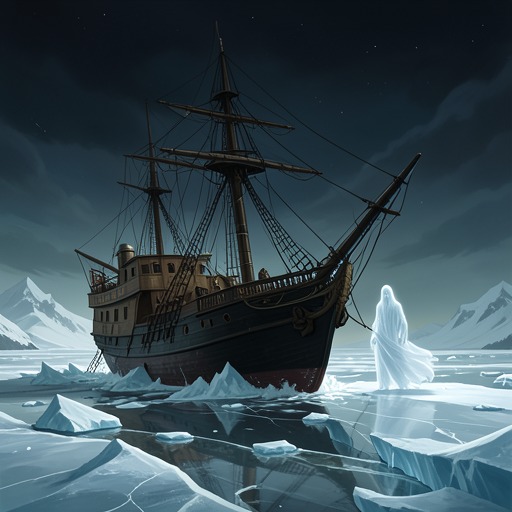
The bird first crosses the ship’s path through fog, at a moment when the surrounding weather and ice have made passage perilous. Its arrival is described as if a Christian soul had come through the mist. That simile gives the encounter a quality of welcome and relief, while the bird itself remains a living presence rather than merely a sign: it comes to the sailors, and its appearance marks a shift in the voyage’s conditions.
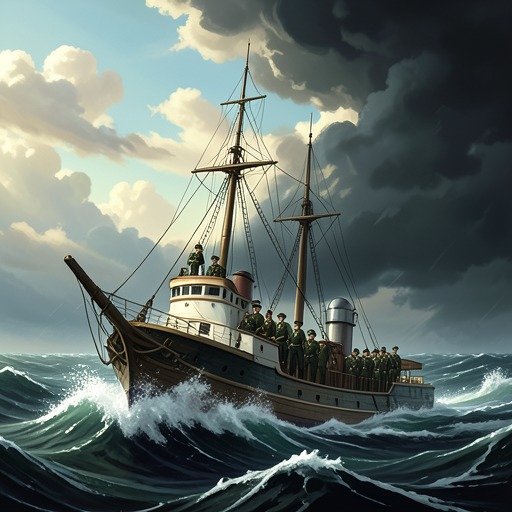
The ice splits, the helmsman steers the ship through, and a good south wind rises behind it. The Albatross follows the vessel, and the sailors see it day after day, for food or play. These details bind the bird to ordinary shipboard life and to a concrete change in the ship’s movement. The encounter is not simply a meeting with an emblematic creature: it unfolds alongside the crew’s navigation through ice and their renewed progress under sail.
The Killing and Its Consequences
The Ancient Mariner’s account makes the killing stark: he says that he has done a hellish thing and that it will bring woe to the others, then acknowledges that he killed the bird. The scene’s force lies partly in the contrast between the Albatross’s preceding welcome and the Mariner’s violence against it. The poem establishes no practical necessity for the shot in the cited account; what it does establish is the act itself and the collective suffering the Mariner associates with it.
The bird’s place in the story changes as the voyage darkens. Instead of the cross, the Albatross is hung around the Mariner’s neck. This substitution makes the dead bird a public, bodily sign of his wrongdoing: a creature that had followed the ship in companionship becomes a burden borne by the killer. The image carries the wrong forward, so that the bird’s death is not left behind as a single past incident but remains physically present in the Mariner’s continuing ordeal.
The Bird and the Mariner’s Change
The Albatross returns in the account of the Mariner’s inward change through the water-snakes he watches in the sea. As they coil and swim, each track flashes with golden fire; the Mariner recognizes their beauty and feels love rise in his heart. The poem does not identify these creatures as the Albatross. Instead, their beauty and the spontaneous affection they awaken mark a change in the Mariner’s relation to living things after he has killed the bird. The episode makes his renewed capacity to cherish life consequential within the poem’s moral sequence.
The later account of the spirit who dwells in the Land of Mist and Snow gives the Albatross a further relation to the Mariner. The spirit loved the bird that loved the man who shot it. This description places affection on both sides of the fatal act: the bird loved its killer, and the spirit loved the bird. The phrasing does not erase the killing; it makes the Mariner’s violence more painful by setting it against the love he received and the love the bird inspired.
Narrative and Thematic Significance
The Albatross’s role develops through sharply opposed images and conditions. At first it appears through fog like a welcomed soul and accompanies a ship moving with a favorable wind. After the shooting, its absence from the sailors’ daily welcome and its presence around the Mariner’s neck give the voyage’s suffering a personal and memorable focus. Later, the image of the bird is recalled through love rather than through its physical return, linking the Mariner’s wrong to the affection he had disregarded.
The bird therefore matters both as a participant in the voyage and as the poem’s enduring image of a broken relation between human beings and other living creatures. Its welcome, its killing, its burdened afterlife around the Mariner’s neck, and the later recognition of love form a sequence of changed meanings. The Albatross is not only the occasion for the Mariner’s punishment: the bird’s remembered kindness helps define what must change in him before he can again respond to life with love.